Nigeria is moving through a practical energy transition. This is not only about adding new generation capacity. It is about reducing diesel exposure, using local gas that is already available, and building modular infrastructure that can serve telecom sites, oilfield operations, industrial clusters and nearby communities.
During this visit, Noah and the CIMC ENRIC team reviewed several active project directions in Nigeria: LNG-to-power for telecom base stations, associated gas collection and power generation for swamp oilfield operations, and two 25MW pipeline-gas power plant opportunities in Rivers State.
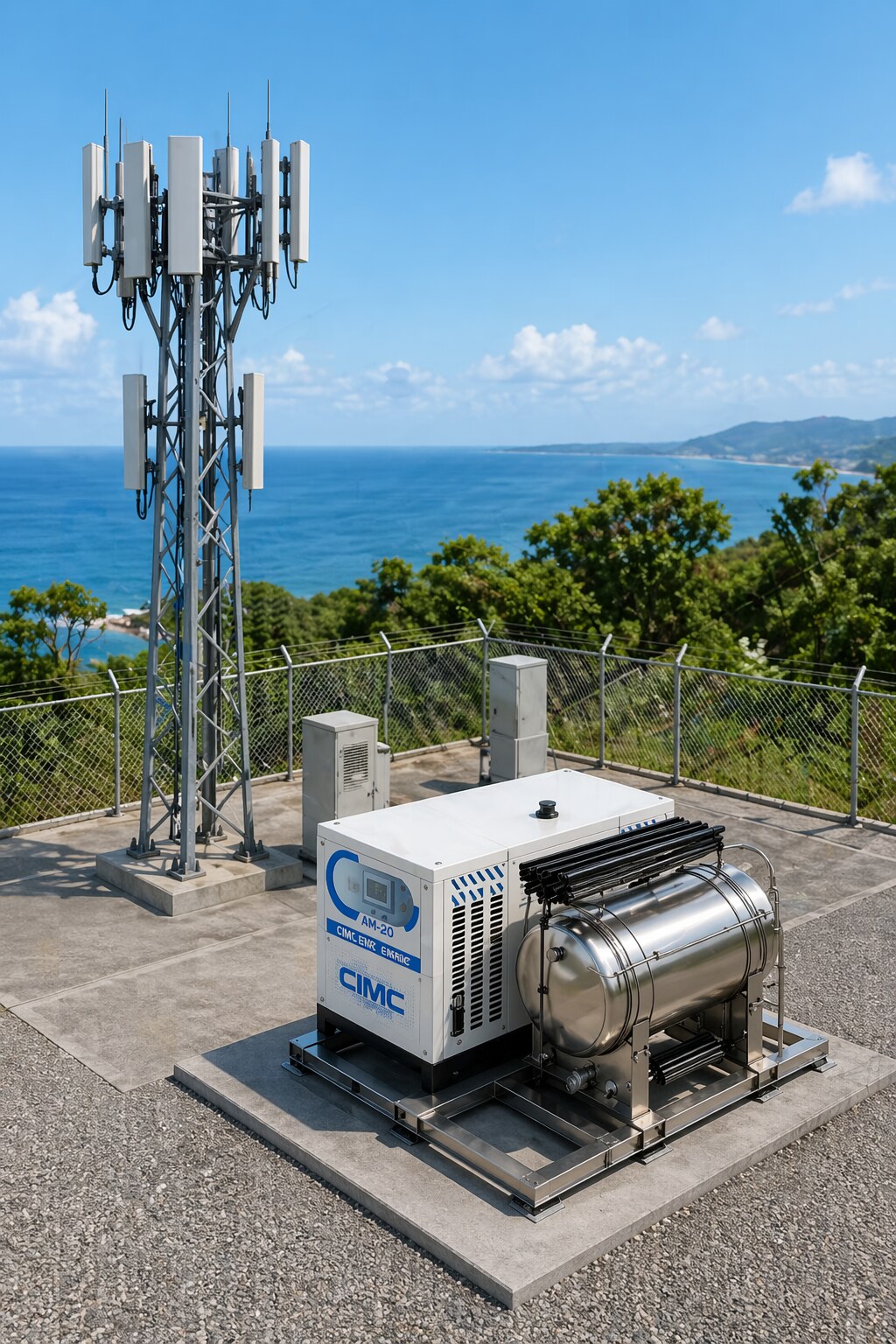
Telecom power reliability
LNG-to-power POC work targets diesel replacement for base station backup and long-duration site power.
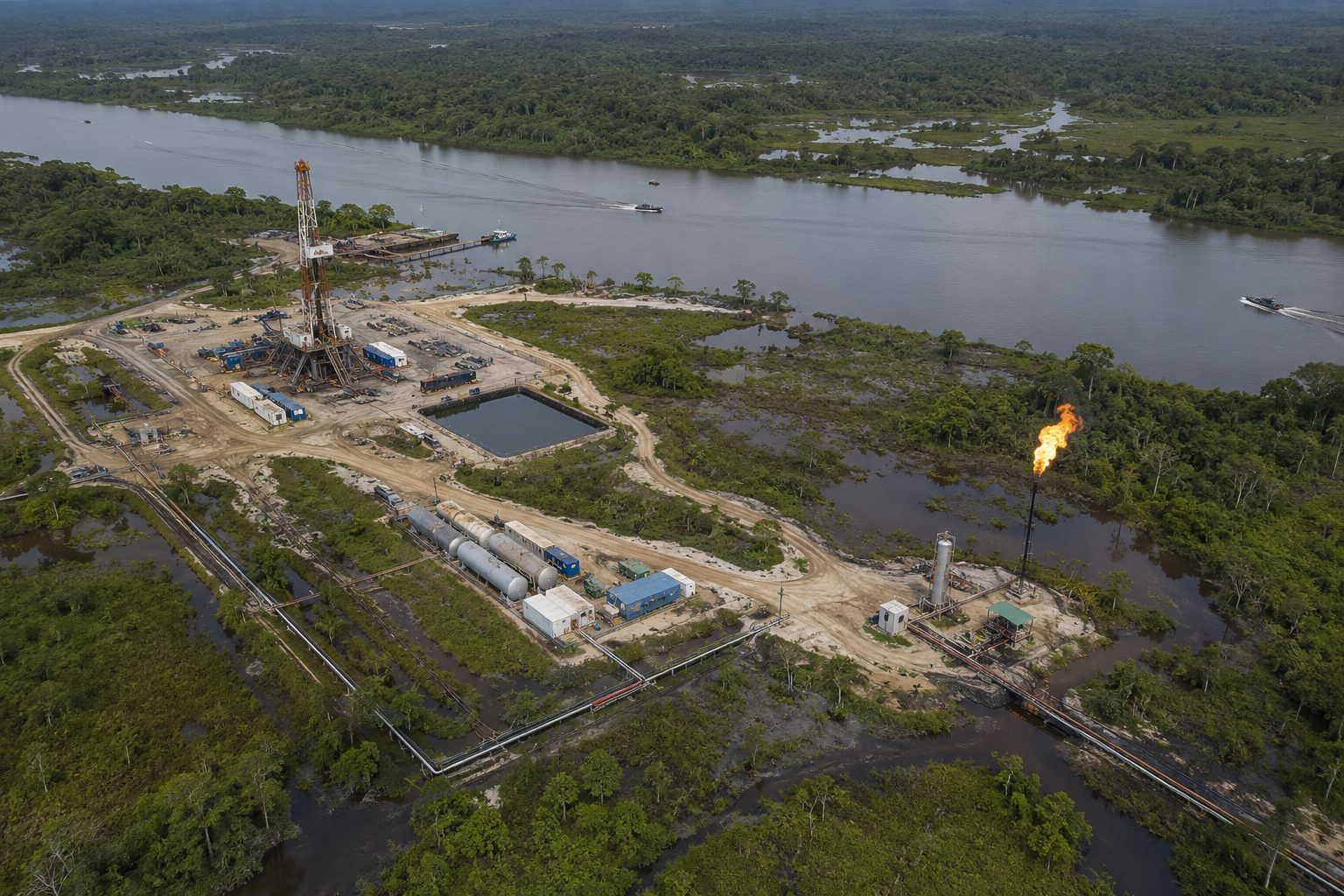
Associated gas utilization
Signed AM600 project converts U1 and U4 associated gas streams into practical oilfield power.
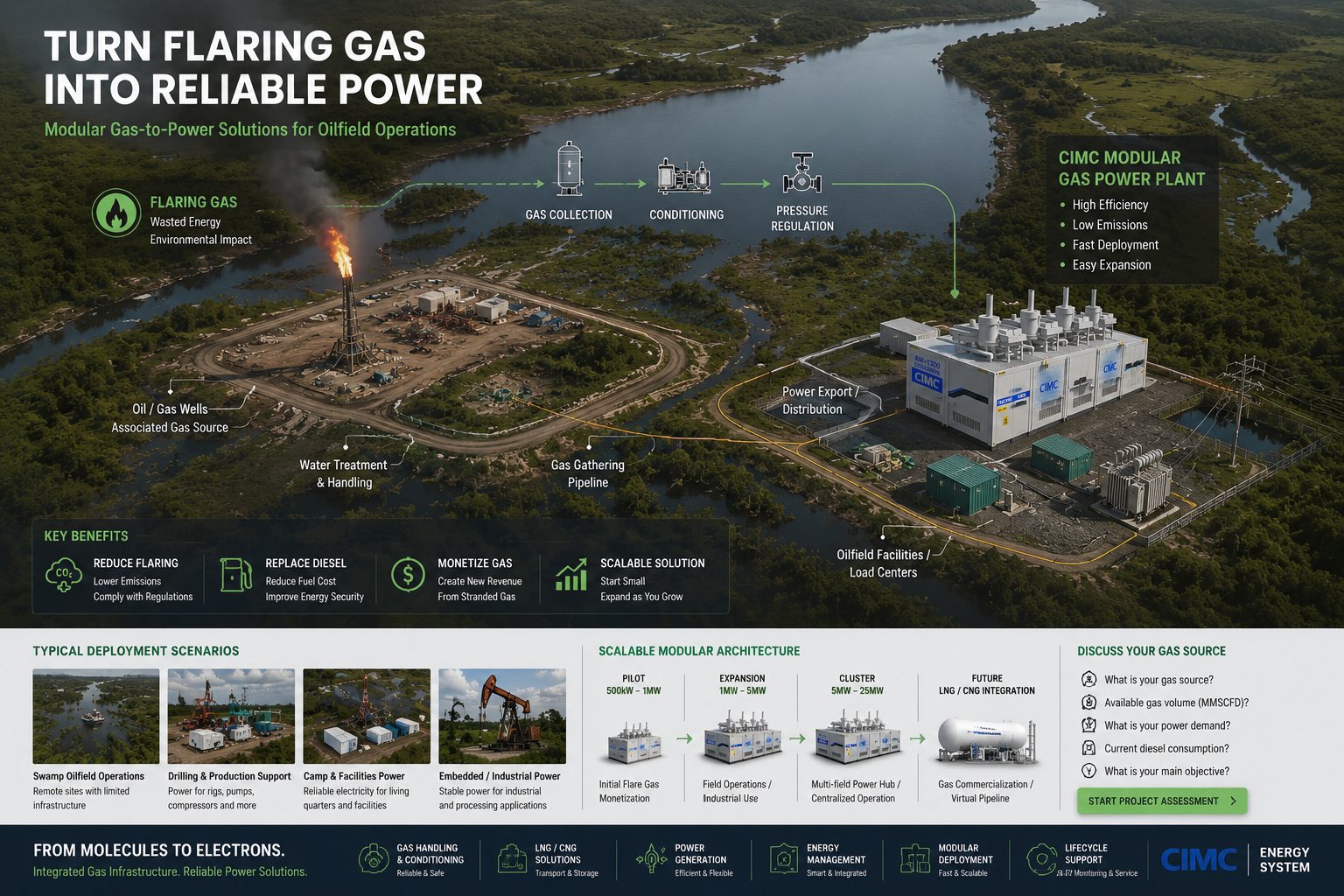
Pipeline-gas power
25MW modular gas power plants can support communities and industrial loads with strong project economics.
1. Telecom sites need power before they can deliver connectivity.
The team first reviewed CIMC's LNG-to-power solution for telecom base stations, now moving through POC preparation in Nigeria. The need is clear from the field: even in Abuja, basic mobile signal and call stability can still be inconsistent. For communities and businesses, unreliable telecom service is not a convenience issue; it affects daily communication, commerce and safety.
Nigeria has more than 30,000 base stations, many of which still rely heavily on diesel backup. As diesel prices rise, the cost burden on telecom infrastructure becomes harder to sustain. LNG-to-power gives telecom operators a practical alternative: modular fuel storage, cleaner gas-based generation and a route to reduce diesel logistics across distributed tower sites.
2. Associated gas is turning from waste into a power asset.
CIMC ENRIC has also signed its first Nigeria swamp-oilfield associated gas collection and power generation project. The project discussions with Cairos Energy were strategic because they reflect a larger market shift: associated gas that was once treated as a disposal issue is becoming a cost item, while diesel remains one of the largest operating burdens for oilfield production.
The field has two associated gas sources, including U1 separator gas and U4 LP separator gas. The gas is sweet, with no H2S detected and low CO2 content, which makes it suitable for direct-combustion gas engines after basic conditioning. CIMC is customizing a containerized AM600 gas generator package for this gas profile, together with associated gas collection and conditioning concepts.
This power can support the oilfield's own production loads, reduce diesel consumption, charge battery storage, or be routed toward nearby communities and local grids where the commercial structure allows. The core idea is simple: stop paying to waste energy, and turn stranded gas into electricity.
3. Rivers State is showing the next wave of modular gas power.
The focus of this trip was also the review of two 25MW pipeline-gas power plant opportunities in Rivers State. Field work reinforced a clear trend: pipeline-gas power is moving closer to maturity because gas access, local demand and community power needs are beginning to align.
Without disclosing project-sensitive numbers, CIMC's early project modeling shows a strong economic pattern. A 25MW modular gas power plant operating around a 20MW load profile can present a payback period close to one year under suitable tariff, gas and offtake assumptions. After payback, annual O&M cost can remain a much smaller share of operating profit, creating a compelling long-term infrastructure model.
CIMC's modular gas engine systems are designed for a service life of more than 10 years, supported by containerized engineering, remote monitoring, spare parts planning and O&M service. The company's operating experience in Daqing Oilfield in China gives the team a proven reference for bringing modular gas power discipline into demanding oilfield environments.
What this means for Nigeria's energy infrastructure
The lesson from this trip is that Nigeria does not need to wait for one single perfect power solution. Telecom sites can start with LNG-to-power. Oilfields can use associated gas that is already available. Communities and industrial users can be served through modular 25MW gas power plants. Each route can start small, prove performance and expand based on real demand.
For CIMC ENRIC, the goal is not only to sell generators. It is to help convert stranded gas, rising diesel cost and local power shortages into bankable modular energy infrastructure. If successful, these models can be replicated across Nigeria and other African markets where gas exists but reliable power is still scarce.
Discuss a Nigeria gas-to-power project
Share your gas source, diesel cost, power demand and site conditions. CIMC ENRIC can review a modular route from gas to reliable power.