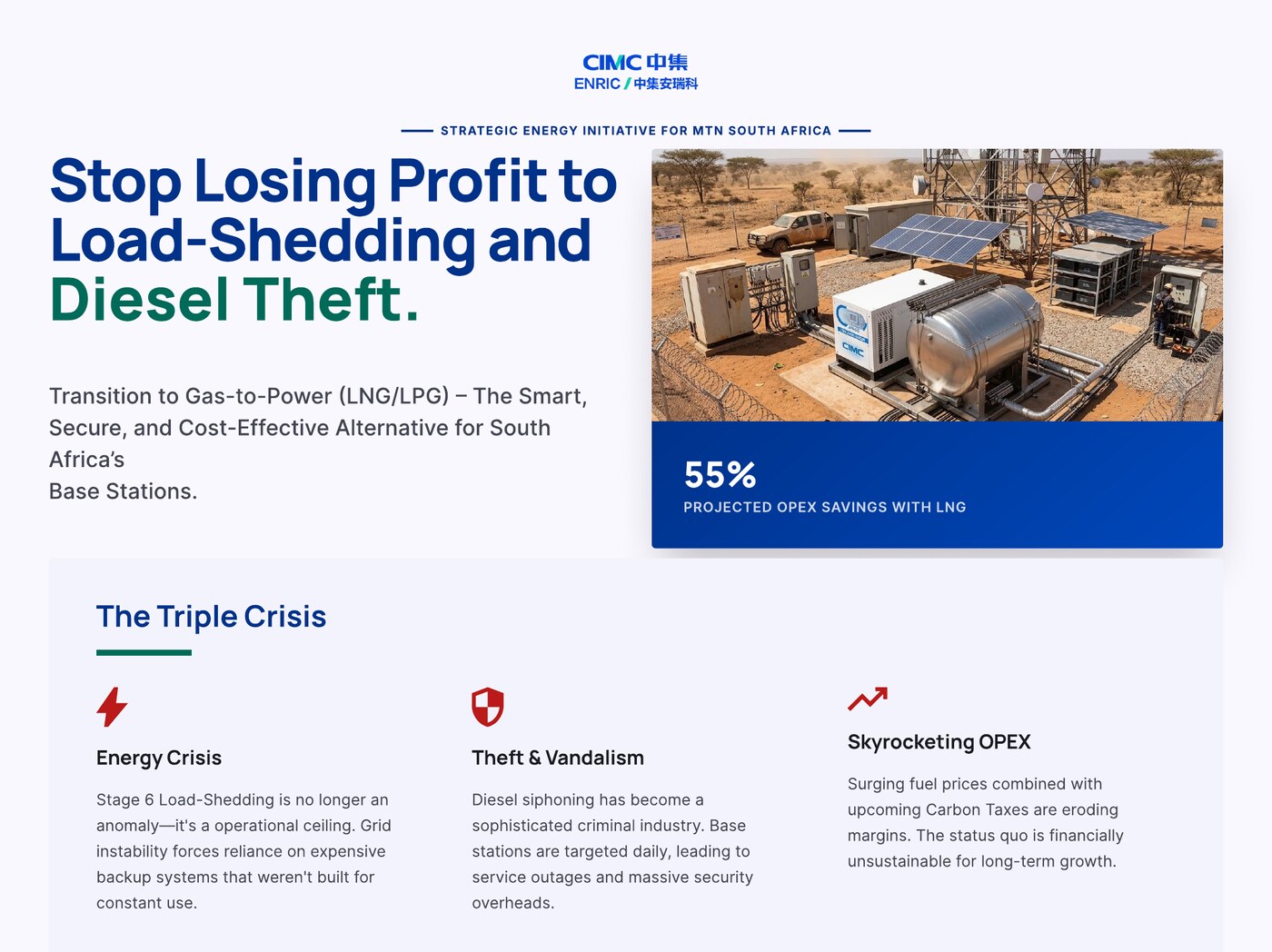
Stop losing uptime to load-shedding, diesel theft and high OPEX.
CIMC ENRIC AM20+LNG micro power station gives telecom operators a compact gas-to-power route for weak-grid and off-grid base stations: secure fuel storage, long-duration backup, clean combustion and fewer site visits.
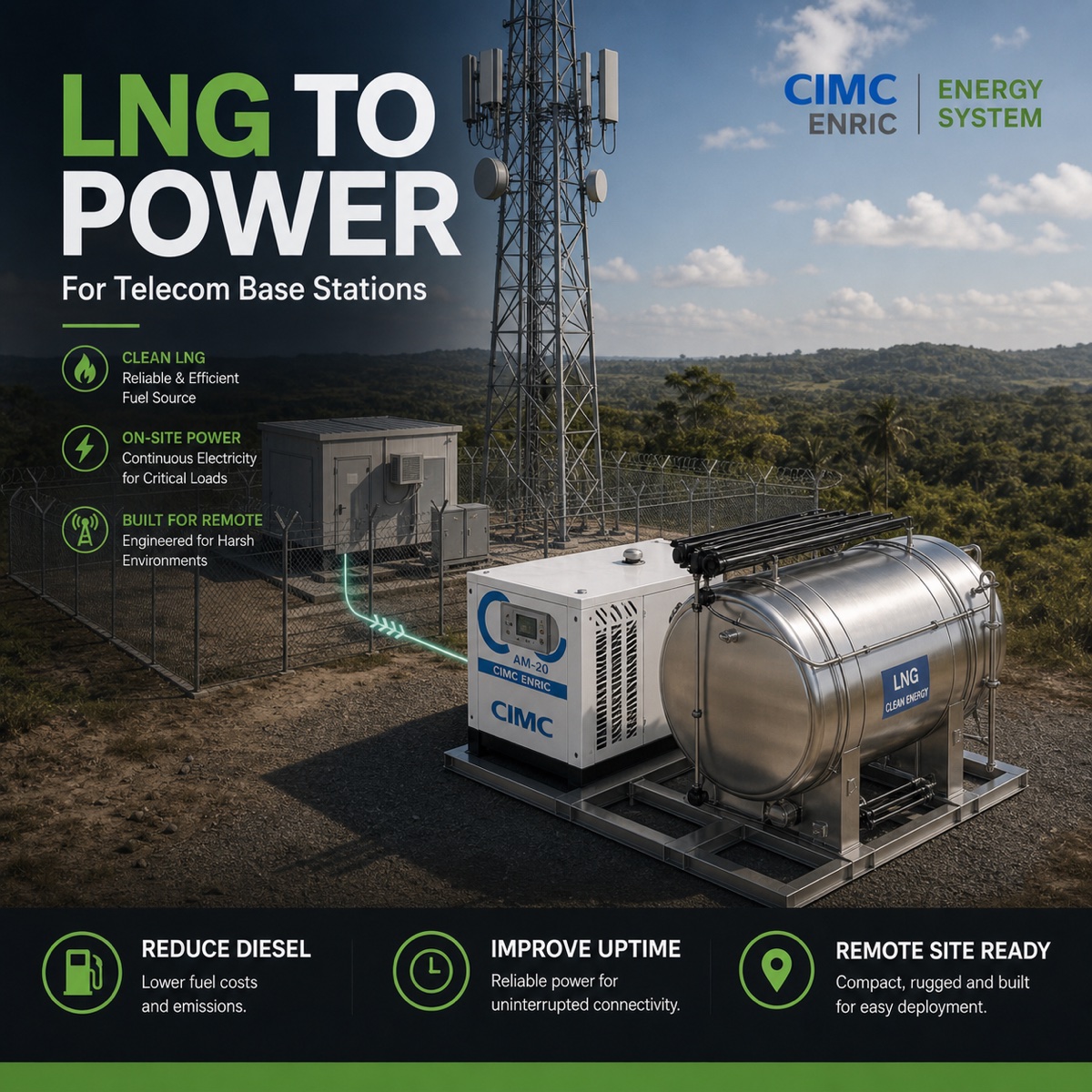
Base stations are being asked to run like critical infrastructure, but diesel backup was not built for constant operation.
The page pitch is clear for operators in South Africa, Nigeria and other weak-grid markets: stabilize uptime, remove the diesel theft incentive and lower the cost of emergency power.
Energy crisis
Load-shedding and grid instability force base stations to rely on backup systems for daily operation rather than occasional outages.
Theft and vandalism
Diesel can be siphoned and resold, which turns fuel storage into a security risk and creates avoidable site downtime.
Skyrocketing OPEX
Fuel price volatility, carbon pressure and frequent maintenance visits erode the economics of diesel-heavy tower operation.
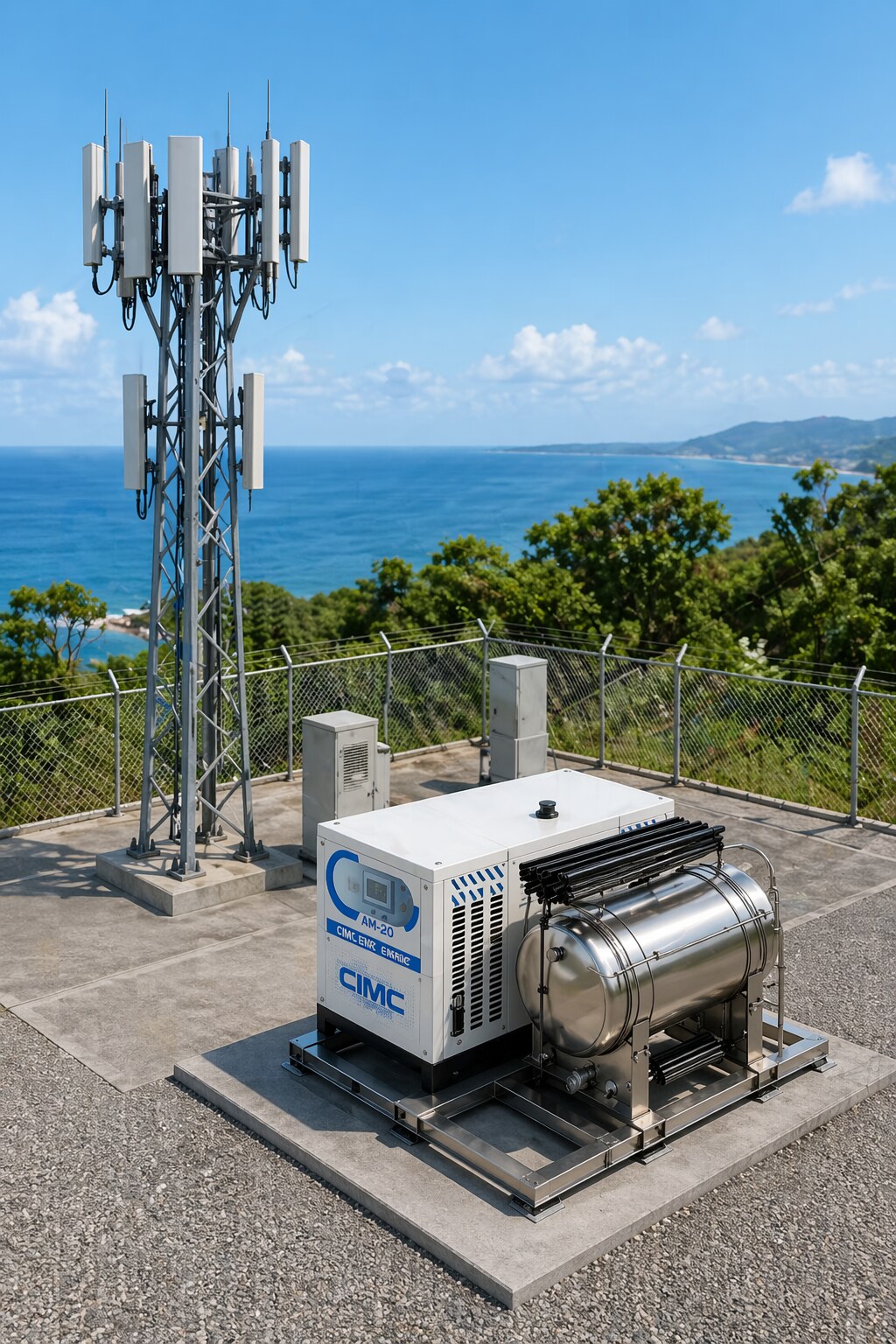
AM20 LNG micro power station, tuned for remote tower economics.
The value is not just replacing one generator with another. It is a telecom-specific package: anti-theft fuel design, cleaner combustion, longer service interval, virtual pipeline refueling and optional PV/BESS coupling.
Pressurized anti-theft fuel storage
LNG/LPG are stored in sealed pressure systems. They cannot be siphoned like diesel, reducing the core incentive for fuel theft and vandalism.
Clean combustion and lower engine wear
Superior fuel quality means less carbon buildup than diesel, supporting longer maintenance intervals and lower technical site visits.
Scalable virtual pipeline logistics
Local LNG/LPG satellite hubs and planned refueling routes support reliable energy availability for distributed tower clusters.
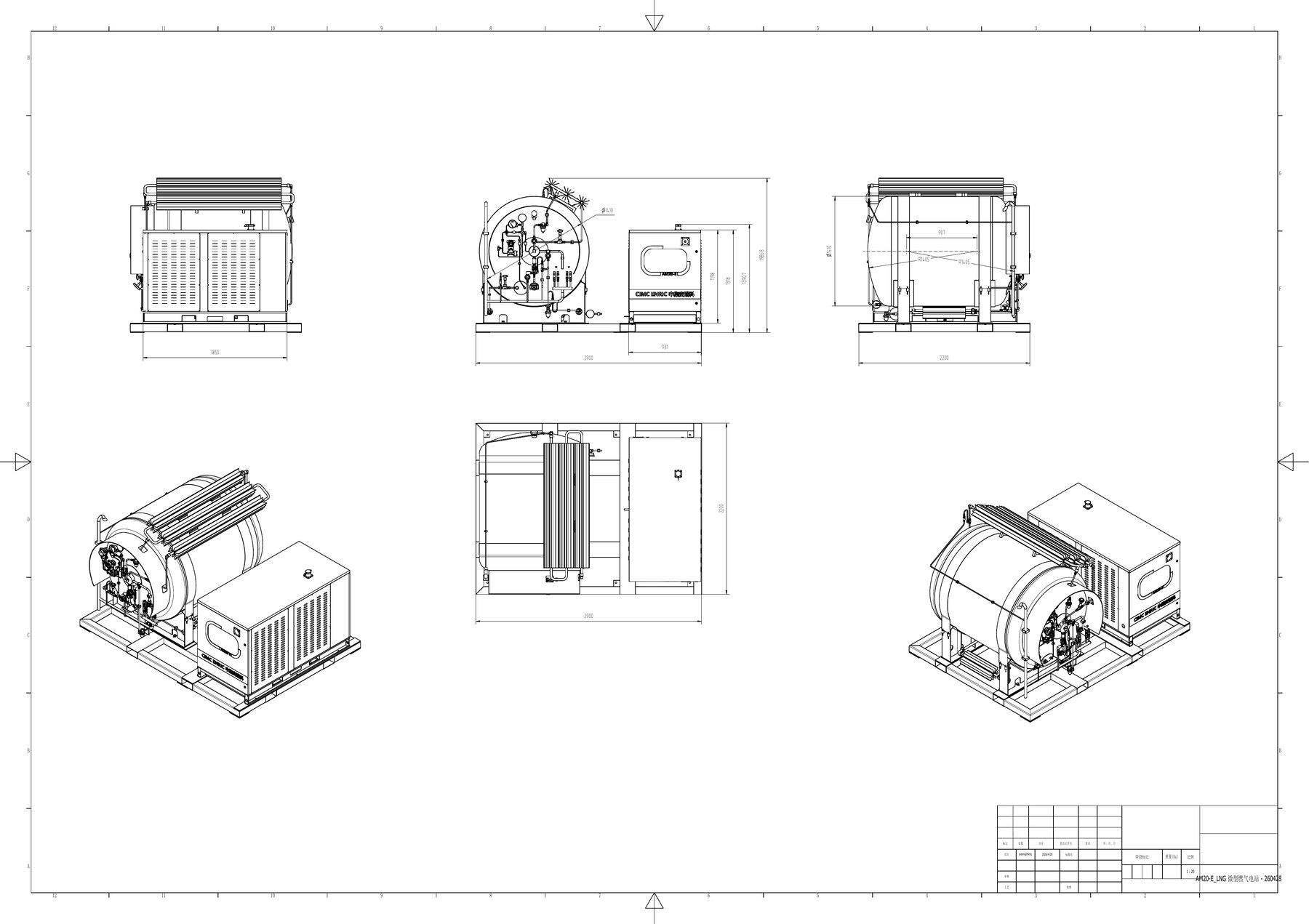
Compact, engineered and ready for site-specific customization.
Specifications below are based on the AM20 telecom reference material and should be finalized by fuel quality, altitude, ambient temperature, noise requirement and site layout.
Technical parameter sheet
| System model | AM20+LNG Micro Gas-fired Power Plant |
|---|---|
| Structure | Integrated open skid-mounted unit, rapid deployment and plug-and-play operation |
| Rated / standby power | 22 kW rated output / 25 kW standby output |
| Rated voltage | 400 V, three-phase five-wire system |
| Rated frequency | 50 Hz |
| Fuel route | LNG vaporized and pressure-regulated to natural gas for the genset |
| Rated gas consumption | Approx. 7 Nm3/h |
| Fuel gas pressure | 3-5 kPa to the gas generator set |
| Methane number | >80 recommended |
| LNG tank volume | 1000 L gross integrated LNG storage |
| LNG tank working pressure | 0.8 MPa |
| LNG tank design life | 20 years |
| Generation efficiency | Approx. 33% |
| NOx emission | ≤30 mg/Nm3 |
| Maintenance interval | 4000 hours for first maintenance cycle under normal operation |
| Dimensions | 2950 x 1900 x 2360 mm |
| Total mass | ≤2850 kg |
| Control and monitoring | Automatic control, manual emergency operation and RS485 communication interface |
Reference economics show why telecom operators should model LNG alongside diesel and LPG.
The source proposal compares fuel cost, efficiency, LCOE and OPEX savings. Final economics must be recalculated with local fuel price, logistics, load profile and tax assumptions.
Input local fuel prices and compare cost per kWh.
Use this screening calculator for a first-pass comparison. Defaults reflect a diesel genset baseline and AM20+LNG technical basis; customers can overwrite prices and consumption assumptions.
Build a telecom energy file before choosing hardware quantities.
We need each site's grid condition, load profile, current diesel consumption, theft/security exposure, access route and preferred LNG/LPG refill model before final ROI and deployment plan.
The telecom story can be sold as a business case, not a standalone genset.
The AM20 LNG page keeps the source pitch: protect margins, reduce theft incentive, improve reliability and support ESG targets for distributed digital infrastructure.
Financial resilience
Longer-term gas procurement and lower energy cost exposure compared with diesel-heavy operation.
Superior reliability
Fewer maintenance visits and lower unplanned downtime from cleaner fuel and longer service intervals.
Unmatched security
Remove the diesel currency incentive by moving to sealed pressurized fuel systems.
ESG leadership
Lower CO2 footprint and reduced soil contamination risk versus diesel spills.
Send us a tower cluster profile. We will build the ROI route.
Share outage hours, diesel baseline, tower load, fuel theft risk, site access and local LNG/LPG supply conditions. We will map the AM20 gas-to-power transition plan.