25MW Pipeline Gas Power Plant: A Bankable Modular Route for Nigeria
When pipeline natural gas is available, the distance of the pipeline is not the central question. The real question is whether pipeline CAPEX, offtake demand and plant economics can support a profitable power asset. CIMC ENRIC's 25MW modular gas power plant concept is designed around that project logic.
Pipeline CAPEX Can Be Treated as Part of the Power Asset
For Nigeria's IPP and PPA market, pipeline natural gas can create a strong project model when the gas route, power demand and tariff assumptions are aligned. If the pipeline can be financed as project CAPEX, the modular plant can convert that gas access into a bankable generation asset.
Gas route first
The pipeline distance is manageable when the pipeline construction cost is included in the total project CAPEX and supported by long-term gas and power offtake assumptions.
80% absorption target
At 80% load factor, a 25MW plant can deliver around 175GWh of annual electricity, giving the project enough utilization to support strong payback under suitable PPA or IPP terms.
O&M stays controlled
After commissioning, annual O&M can remain a relatively small part of revenue, often around 10% under a disciplined service and spare-parts plan, subject to final scope.
Why 25MW Pipeline Gas Can Work in Nigeria
The economics are driven by three practical inputs: gas availability, load absorption and tariff stability. Under suitable PNG supply and PPA or IPP revenue assumptions, an 80% load profile can support a payback period of around one year in the project model.
Revenue engine
25MW at 80% utilization gives roughly 20MW average delivered power, creating a strong continuous revenue base.
CAPEX discipline
Modular equipment, containerized installation and standardized balance-of-plant help keep total project cost controllable.
Long asset life
CIMC's modular gas power package is designed for 10+ years of service life with planned maintenance and remote support.
18-Unit Modular Arrangement Designed for Maintainability
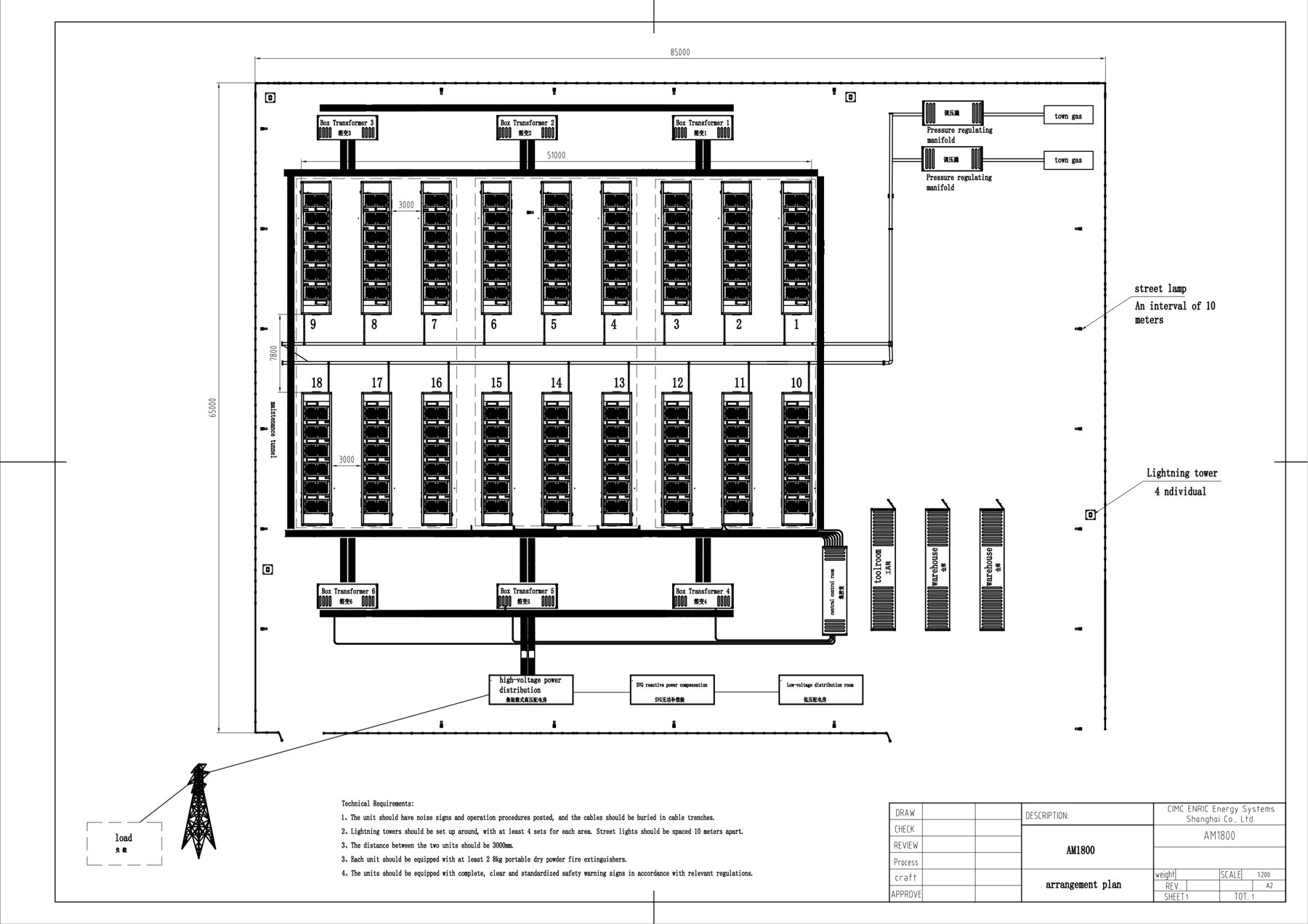
The 25MW plant layout uses modular AM1800 gas generation blocks with space reserved for maintenance access, gas regulation, transformers, high-voltage distribution, reactive compensation, control and warehouse functions.
Power island
- 18 modular gas genset positions
- Central maintenance road and ideal service spacing
- Gas gathering and pressure regulating interface
Electrical export
- Box transformers
- High-voltage distribution room
- SVC reactive power compensation
- Low-voltage distribution support
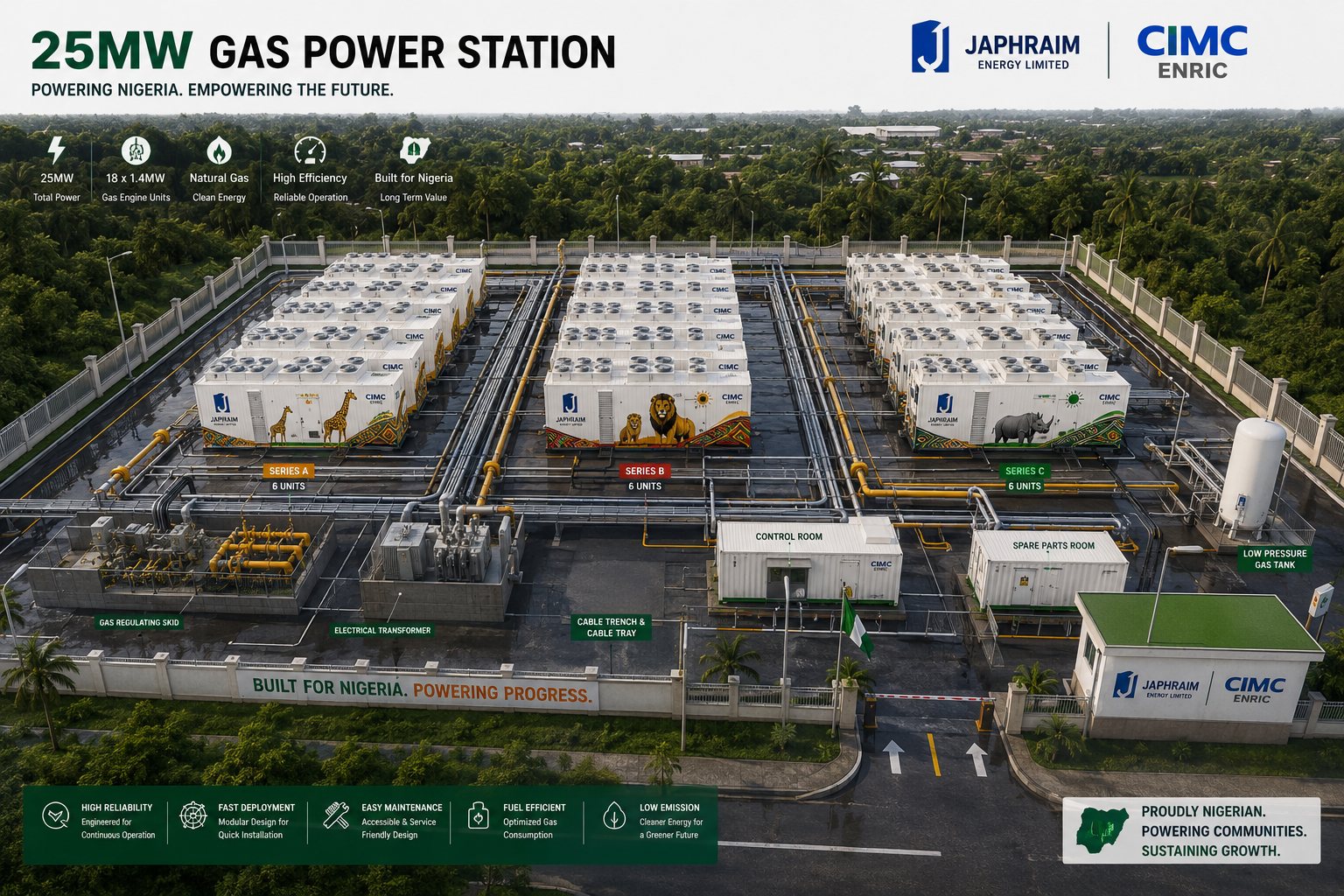
The visual concept is backed by a maintainable plant layout.
Behind the presentation visual is a practical 25MW arrangement plan with defined equipment spacing, gas regulation area, transformer locations, cable routing, high-voltage distribution and O&M access. This layout remains useful for detailed engineering discussions.
From 25MW to 50MW by Repeating the Same Project Logic
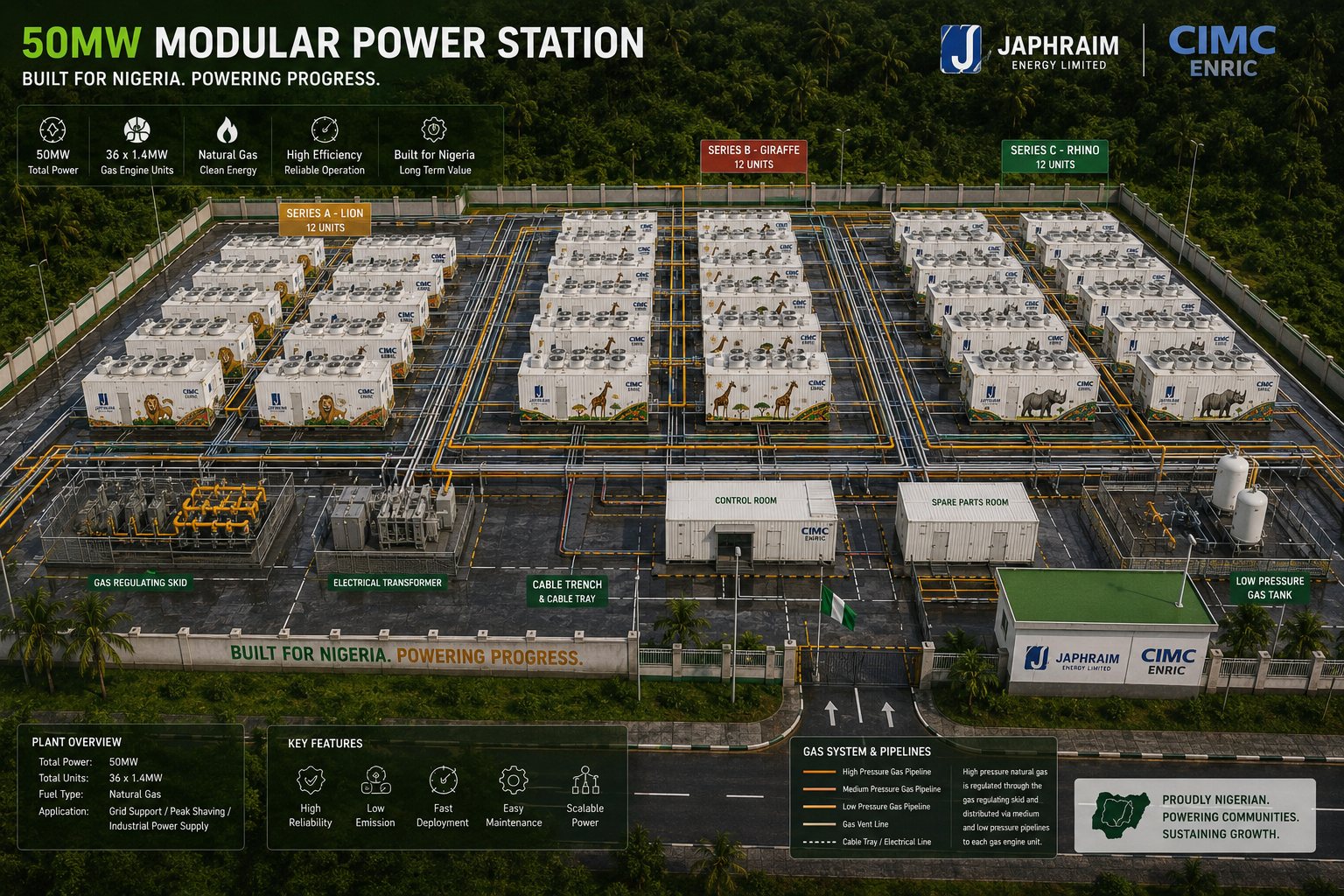
The 50MW layout is essentially a repeatable expansion of the 25MW structure. This matters for investors because the first 25MW block can prove gas supply, construction model, O&M system and power offtake before scaling to a larger hub.
Phase 1
Build the first 25MW block around confirmed gas access and near-term demand.
Phase 2
Replicate the same modular arrangement when load, gas and PPA structure support expansion.
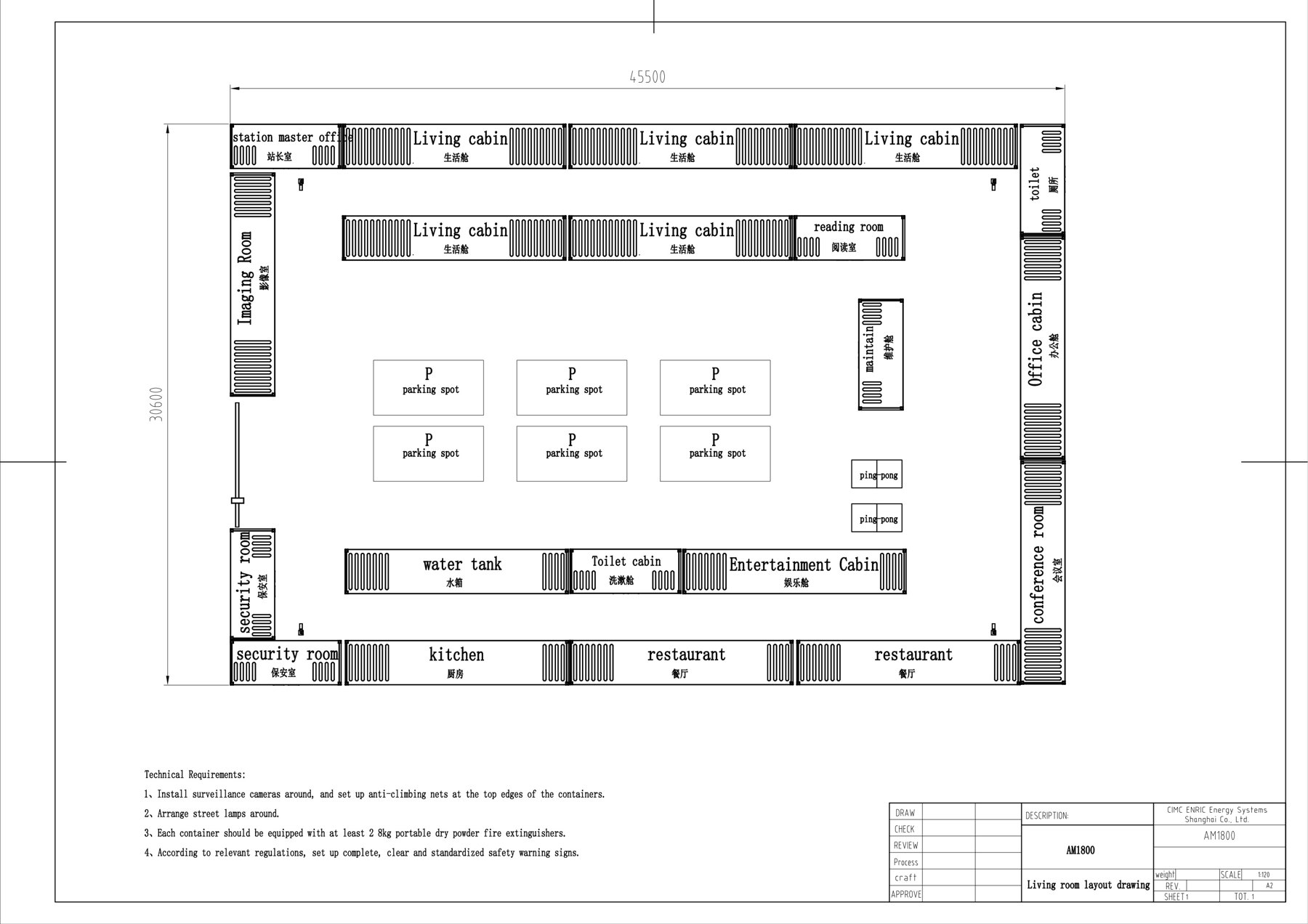
Power Plant Delivery Includes More Than Generators
For remote and community-facing projects, the plant requires accommodation, tools, control functions, security, monitoring and utility support. The living and support area can be adjusted based on client requirements and final site conditions.
| Area | Purpose |
|---|---|
| Living cabins and office cabins | Support O&M team presence during construction and operation. |
| Control and monitoring room | Centralize dispatch, remote monitoring and plant supervision. |
| Warehouse and tool room | Store spare parts, tools and consumables for planned maintenance. |
| Security and utilities | Support safe site operation in remote or community-adjacent areas. |
Built to Bring Daqing-Style Operating Discipline to Nigeria
CIMC ENRIC's modular approach combines Chinese manufacturing quality, containerized engineering and oilfield operating experience. The goal is to replicate proven modular gas power practices into Nigeria's community and industrial power market.
Fast COD
Containerized generation and predefined plant areas reduce site construction uncertainty.
Maintainable design
Layout spacing is designed around real maintenance access, not just minimum footprint.
Investor visibility
Standardized modules make CAPEX, O&M and expansion planning easier to model.
Community impact
Reliable gas power can bring continuous electricity to loads that diesel-only models cannot support economically.